
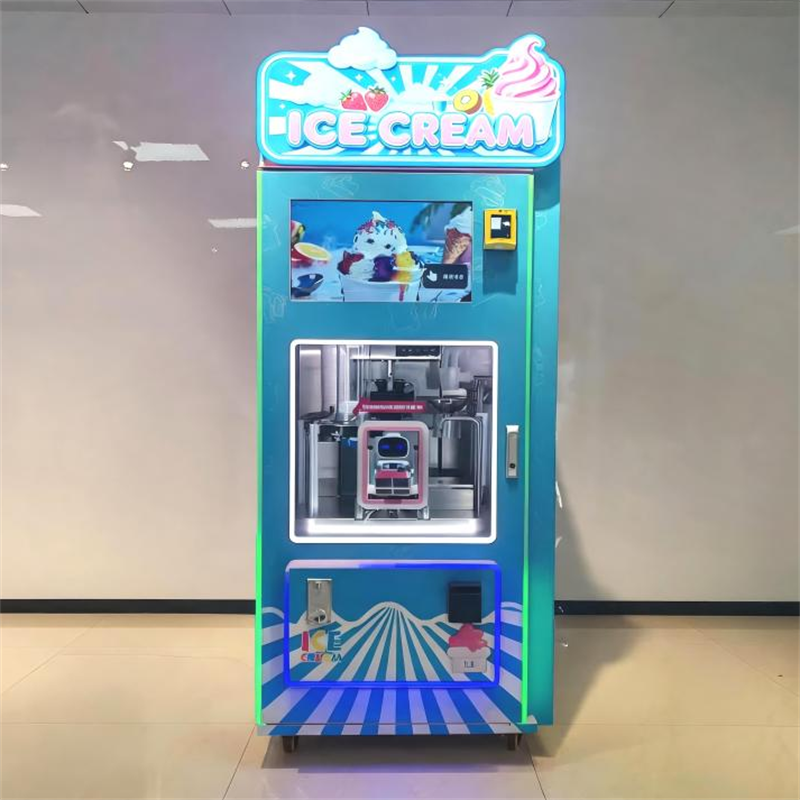
An ice cream vending business looks simple from the outside: install a machine, load ingredients, accept payment and sell ice cream automatically.
In practice, the result depends on much more than the machine itself.
Location, customer dwell time, ingredient storage, cleaning, replenishment frequency, payment methods and remote management all affect whether the operation can remain efficient over the long term.
SUNZEE develops and operates automatic dessert vending equipment for commercial locations such as scenic areas, amusement parks, family entertainment centers, shopping malls and other high-traffic venues.
Based on our operating experience, a successful ice cream vending project should be planned in the following order:
1. Choose the right location
2. Estimate realistic operating costs
3. Select the right vending machine
4. Build a replenishment and cleaning routine
5. Configure local payment methods
6. Monitor the machine remotely
7. Test the location before scaling
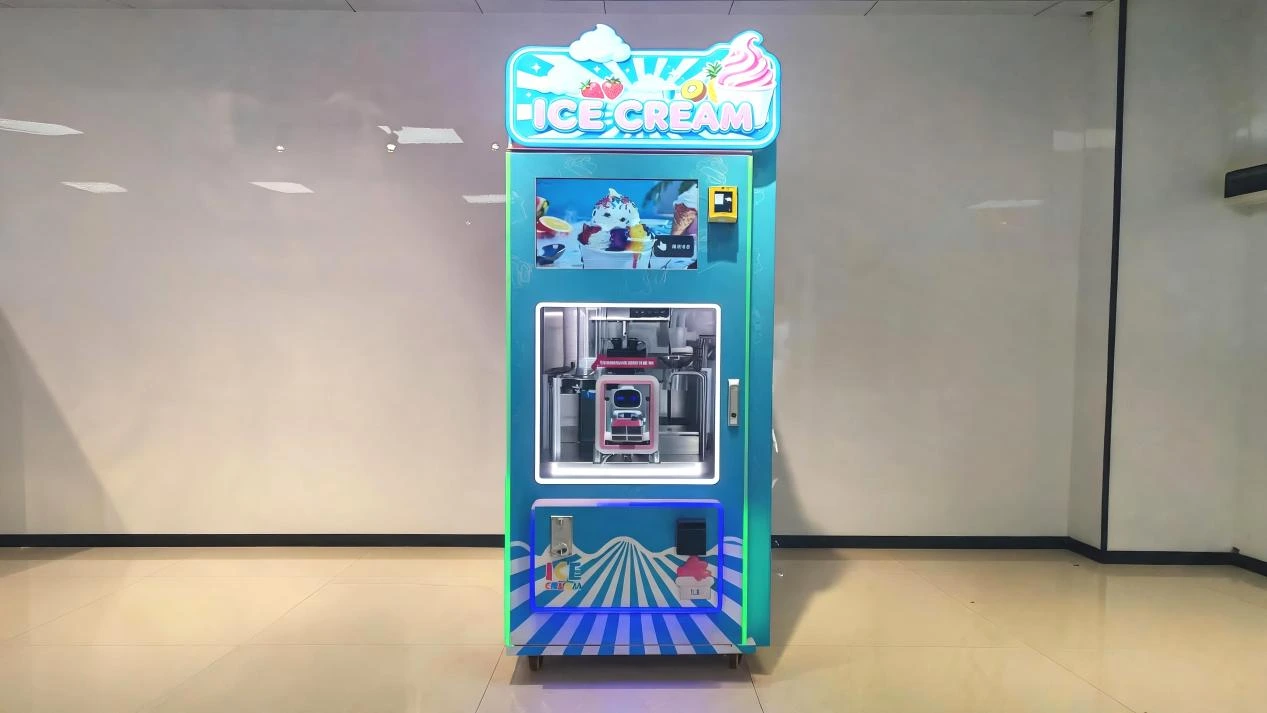
This guide explains each step using the SUNZEE IC350 automatic ice cream vending machine as an example.
Step 1: Choose the Location Before Choosing the Machine
The first question should not be:
Which ice cream vending machine should I buy?
It should be:
Where will the machine operate, and who will buy from it?
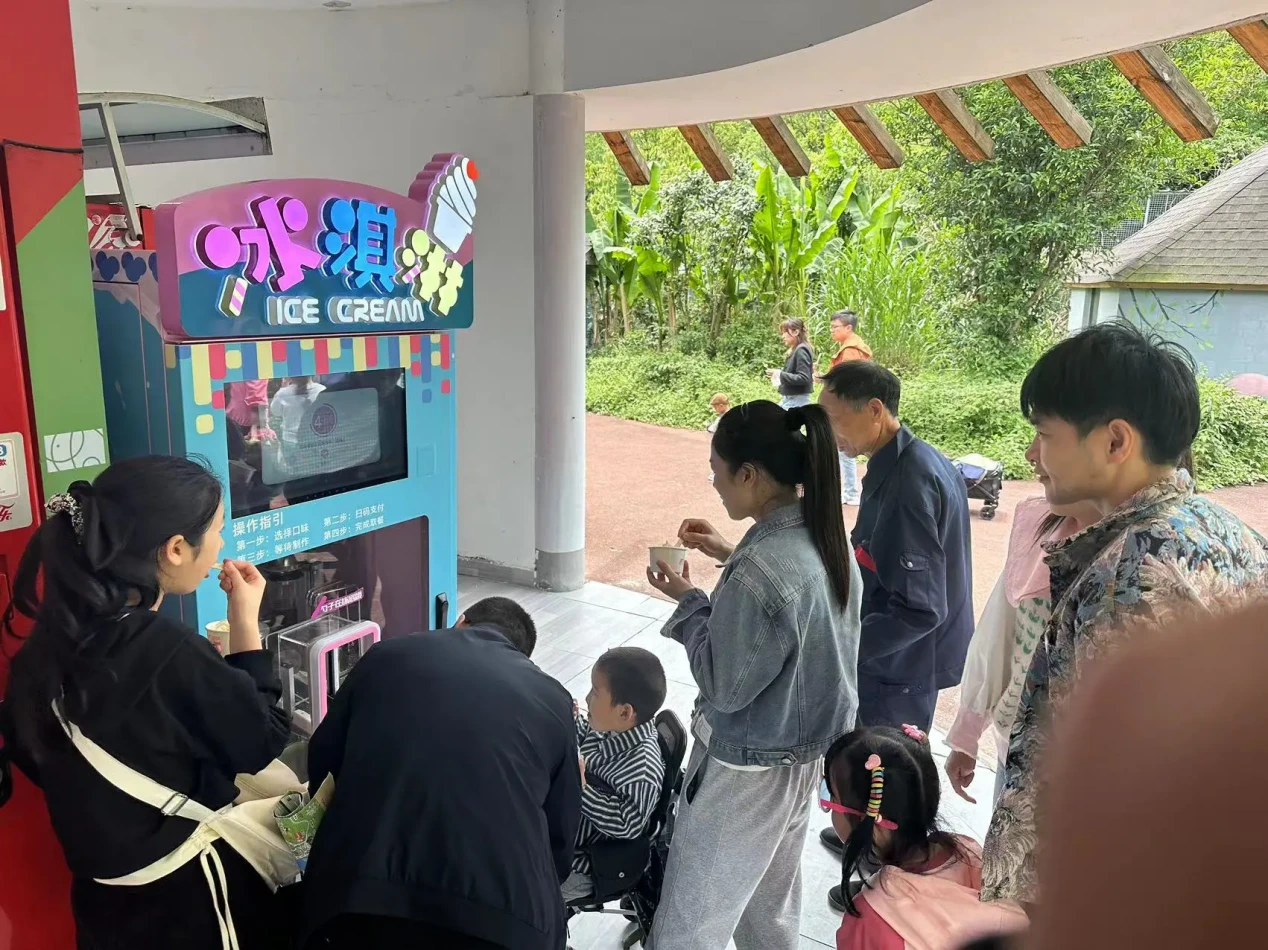
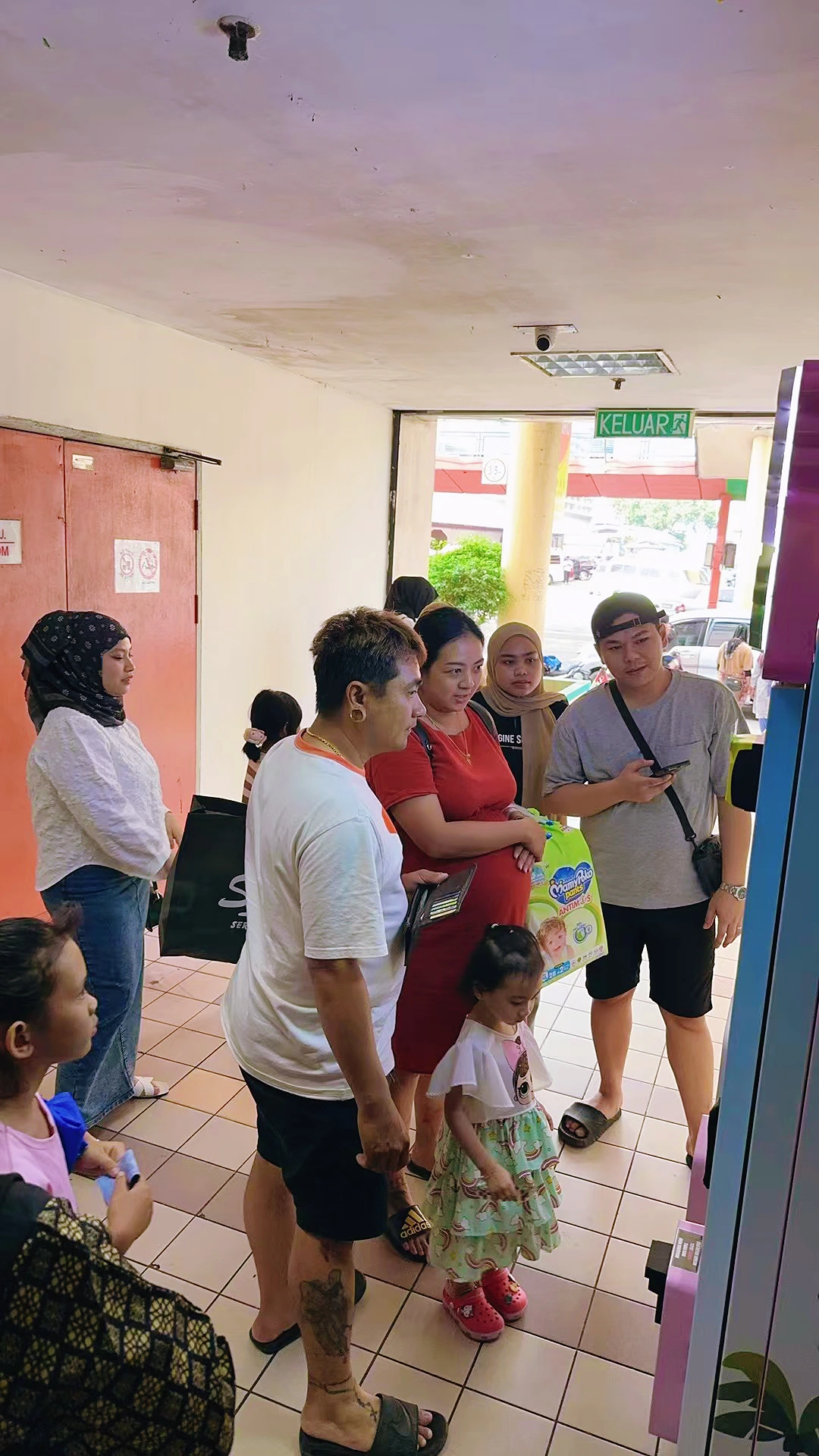
Ice cream is an impulse-consumption product.
People are more likely to buy when they are relaxed, spending leisure time and have enough time to stop.
Based on SUNZEE's experience, locations worth evaluating include:
· Scenic areas
· Amusement parks
· Family entertainment centers
· Shopping malls
· Commercial streets
· Zoos
· Children's parks
· Family-oriented attractions
These locations usually combine leisure traffic with longer customer dwell time.
Locations We Are More Cautious About
High traffic does not automatically mean high sales.
Locations such as:
· Train stations
· Metro stations
· Fast-moving commuter corridors
may have large traffic numbers, but many visitors are focused on getting to their destination rather than stopping to buy dessert.
For an ice cream vending location, we recommend evaluating:
· Daily foot traffic
· Customer dwell time
· Family and children's traffic
· Machine visibility
· Available operating space
· Rent
· Power
· Network signal
· Seasonal traffic changes
A smaller leisure venue with customers who stay for an hour may sometimes be more suitable than a transportation location with much higher but faster-moving traffic.
Step 2: Build a Realistic Revenue and Cost Model
Before purchasing equipment, calculate the business using the actual conditions of the proposed location.
Do not calculate profit using selling price alone.
The main costs normally include:
· Ice cream ingredients
· Cups and consumables
· Venue rent
· Electricity
· Payment processing
· Replenishment labor
· Cleaning and maintenance
· Logistics and spare parts
Ingredient Cost Reference
Based on SUNZEE's current operating reference in China, the ingredient cost is approximately:
RMB 2 per cup, or roughly US$0.30.
Actual cost varies according to powder formula, toppings, sauces, cup size and local ingredient sourcing.
Selling Price Reference
In China, a common selling price can be approximately:
RMB 15–30 per cup.
In some overseas markets, operators may price ice cream at approximately:
US$4–8 per cup.
These figures are market references rather than recommended fixed prices.
The correct selling price should be determined according to local purchasing power, venue type, competing products and operating costs.
Rent Reference
For some SUNZEE operating environments in China, monthly venue rent may be approximately:
RMB 1,500–3,000, roughly US$225–450.
Rental structures vary significantly by city and venue.
Some locations charge fixed rent, while others may use revenue sharing.
For a new location, the commercial terms can have as much impact on profitability as the machine itself.
USD conversions are approximate based on exchange rates at the time of writing.
What Does a Typical Sales Example Look Like?
A reference daily sales level from SUNZEE operations is approximately:
80 cups per day.
This should not be treated as a guaranteed sales figure.
Actual volume may be significantly higher or lower depending on:
· Location
· Weather
· Season
· Selling price
· Family traffic
· Weekends and holidays
· Venue popularity
Operators should use their own location data whenever possible.
A simple calculation model is:
Daily Revenue = Daily Cups Sold × Selling Price
Then calculate:
Operating Profit = Revenue − Ingredients − Rent − Electricity − Payment Fees − Replenishment − Maintenance − Other Local Costs
This gives a much more realistic picture than comparing ingredient cost and selling price alone.
What About Payback Period?
There is no universal payback period for an ice cream vending machine.
Based on SUNZEE's operating experience, some projects may recover the initial equipment investment within approximately:
4–8 months.
However, this depends heavily on:
· Equipment configuration
· Daily sales
· Selling price
· Rent
· Ingredient cost
· Local operating expenses
SUNZEE does not recommend treating 4–8 months as a guaranteed ROI.
It should be used only as an operating reference.
The safest approach is to calculate the proposed location using conservative daily sales assumptions before investing.
Step 3: Choose the Right Type of Ice Cream Machine
One of the most important operating decisions is how the machine stores and prepares the ice cream mixture.
Traditional soft-serve equipment often relies on prepared liquid mix that must be refrigerated and managed carefully.
For unattended vending, this can create several operational challenges.
Common pain points include:
· Frequent manual cleaning
· Numerous food-contact components requiring attention
· Liquid mix storage and refrigeration
· Risk of ingredient waste when prepared mix is not sold in time
· Frequent staff visits
· Difficulty scaling multiple machines
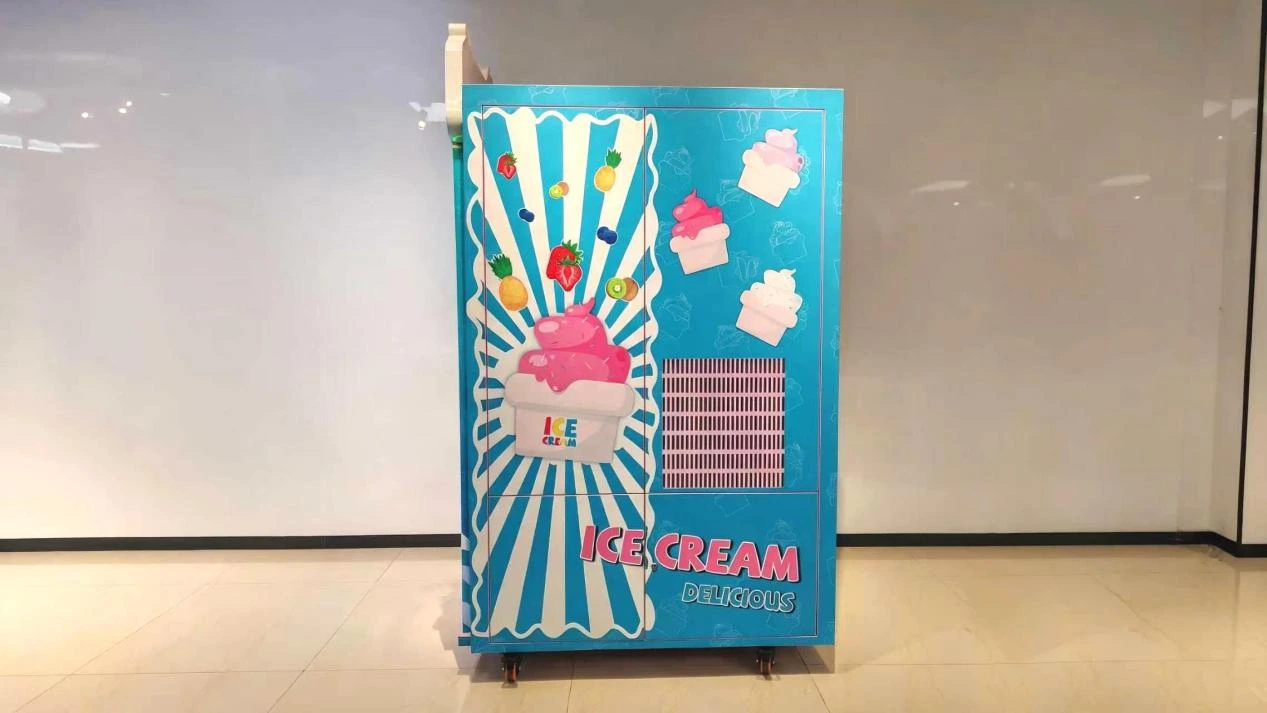
The IC350 was developed around a different operating concept.
Instead of keeping large quantities of prepared liquid mix waiting inside the machine, it uses dry ice cream powder and prepares the mixture according to demand.
IC350 Powder-Based System vs. Conventional Liquid-Mix Operation
1. Dry Powder Storage
Ice cream powder is easier to store before mixing than pre-prepared refrigerated liquid mix.
With the IC350, powder can remain dry inside the ingredient system until required for production.
The machine then automatically mixes the required ingredients for each production cycle.
This helps reduce the amount of prepared ice cream mix sitting inside the machine for long periods.
It can also help reduce ingredient waste when sales fluctuate.
2. On-Demand Mixing
The IC350 prepares the ice cream mixture according to actual orders.
Instead of preparing a large batch of liquid mix in advance, ingredients are automatically measured and mixed when required.
This allows operators to align ingredient consumption more closely with actual sales.
3. Rapid Cooling and Production
During preparation, hot water is used to mix the ice cream powder before the mixture enters the cooling process.
The machine then rapidly cools the prepared mix, with a typical production cycle of approximately:
70–90 seconds, depending on operating conditions and product configuration.
The final soft ice cream is produced at a low dispensing temperature suitable for serving.
The IC350 uses separate refrigeration functions for different stages of the production process, helping maintain cooling efficiency during continuous operation.
Step 4: Reduce Cleaning Work Through Automatic High-Temperature Cleaning
Cleaning is one of the biggest operational challenges in ice cream vending.
Traditional soft-serve equipment can require operators to manually remove, wash and reinstall multiple food-contact components.
In some machine configurations, more than 20 components may require manual attention during deep cleaning.
This becomes a significant issue for operators managing multiple locations.
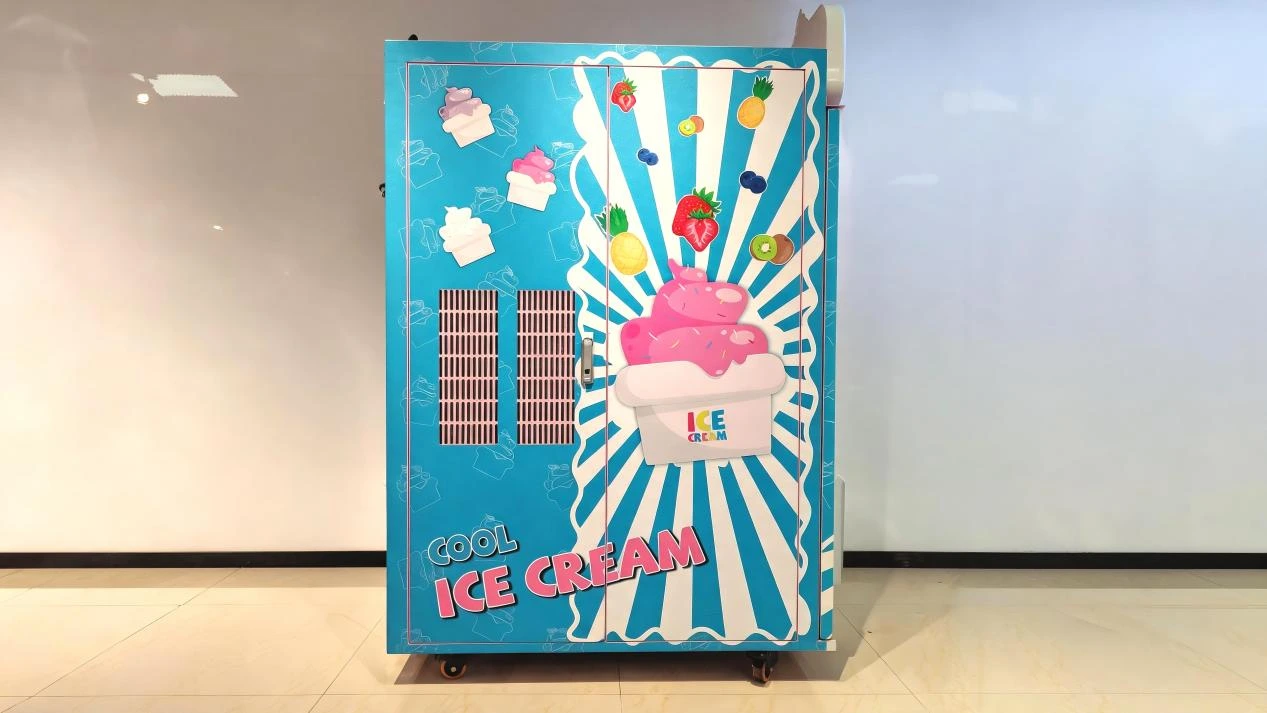
The IC350 is designed with an automatic cleaning process.
The machine performs a daily high-temperature hot-water cleaning cycle at approximately:
90°C.
This helps clean the food-contact system and reduces the amount of routine manual cleaning required.
Automatic cleaning does not mean operators never need to inspect or maintain the machine.
Regular checks and cleaning still need to follow the operating manual.
The advantage is that the most repetitive daily cleaning process can be automated, reducing the amount of on-site labor required.
Step 5: Plan Replenishment Before Launch
Unattended vending does not eliminate replenishment.
It changes replenishment from continuous staffing into scheduled servicing.
For the IC350, a typical replenishment interval can exceed:
one week, depending on sales volume and configuration.
A high-volume location will naturally require more frequent visits.
Operators should monitor:
· Ice cream powder
· Cups
· Toppings
· Sauces
· Water
· Wastewater
The correct replenishment schedule should always be based on actual sales rather than a fixed calendar.
Step 6: Use Remote Management for Multiple Machines
The economics of unattended vending become more attractive when operators can manage several machines without visiting every location every day.
The IC350 supports remote management.
Operators can use the management system to monitor machine information and operating status remotely.
This is especially important for:
· Dealers
· Multi-location operators
· FEC groups
· Amusement park operators
· Shopping mall vending operators
One employee can monitor multiple machines and arrange service visits according to actual needs instead of checking every machine manually.
This helps reduce unnecessary travel and improves route planning.
Step 7: Configure Payment for the Local Market
Payment habits vary by country.
The IC350 can be configured according to the target market, including payment options such as:
· Card payment
· Banknotes
· Coins
The final configuration should be confirmed before production according to the destination country and venue requirements.
Payment service providers may charge their own transaction fees.
Operators should include these fees in the business calculation.
Fresh Ice Cream + Multiple Product Options
An automatic ice cream vending business does not have to rely on only one basic product.
The IC350 can support different powder flavors as well as toppings and sauces, depending on configuration.
This allows operators to create more product combinations from one machine.
For entertainment venues and family-oriented locations, variety can improve the customer experience and provide opportunities for different price levels.
However, the menu should remain simple enough for customers to order quickly.
More options are not always better if they make the purchase process confusing.
Why Replenishment Frequency Matters
A vending business is not only about sales.
It is also about how often an employee must visit the machine.
Imagine two machines with similar sales:
Machine A: requires daily ingredient preparation and cleaning.
Machine B: stores dry ingredients, automatically cleans key systems and can operate for several days before replenishment.
Even if both machines generate similar revenue, their operating workload can be very different.
This is why operators should evaluate:
Revenue per machine + labor required per machine
rather than sales alone.
For operators planning multiple locations, replenishment frequency can directly affect how many machines one team can manage.
Step 8: Start with One Location, Then Scale
A common mistake is purchasing several machines before confirming whether the first location works.
A more practical approach is:
1. Select the location
↓
2. Install the first machine
↓
3. Track daily orders
↓
4. Review peak hours and replenishment frequency
↓
5. Calculate real operating profit
↓
6. Optimize the location or pricing
↓
7. Expand after the model is proven
Real operating data is more useful than any theoretical ROI calculation.
For distributors and larger operators, this pilot-first approach can also help establish a local business model before expanding to multiple venues.
Certifications and Local Requirements
Regulatory requirements vary by country.
Operators should confirm local requirements related to:
· Electrical safety
· Food operation
· Payment systems
· Venue rules
· Food-contact requirements
SUNZEE currently provides applicable CE compliance support and relevant food-safety documentation for its products, while additional country-specific machine and electrical certifications are being developed according to different target markets.
Before ordering, customers should provide the destination country so the applicable requirements can be reviewed.
Ice Cream Vending Business Checklist
Before launching an ice cream vending location, confirm the following.
Location
· Is there enough leisure traffic?
· Do customers have time to stop?
· Are families and children common?
· Is the machine easy to see?
Commercial Terms
· What is the monthly rent?
· Is revenue sharing available?
· Are there additional venue fees?
Infrastructure
· Is stable electricity available?
· Is network coverage reliable?
· Can the machine be serviced easily?
Operation
· Who will replenish ingredients?
· How often will the machine need service?
· How will wastewater be handled?
· Who will respond to machine alerts?
Business Model
· What is the selling price?
· What is the real ingredient cost?
· How many cups per day are required to cover rent?
· What sales level is needed to recover the equipment investment?
If these questions cannot be answered, it is usually too early to buy the machine.
Frequently Asked Questions
How much does it cost to start an ice cream vending machine business?
The total investment depends on the machine configuration, shipping, payment system, venue rent and local setup costs.
SUNZEE does not publish a fixed IC350 price in this guide because configurations vary by project.
Customers can provide their country and required configuration to obtain a quotation.
How much does one cup of ice cream cost to make?
Based on SUNZEE's current operating reference in China, the basic ingredient cost is approximately:
RMB 2 per cup, or about US$0.30.
The final cost varies according to powder formula, toppings, sauces and local sourcing.
How much can I sell one cup for?
In China, a common reference price is approximately:
RMB 15–30 per cup.
In some overseas markets, retail prices may be around:
US$4–8 per cup.
Operators should set prices according to the local market.
How many cups can an ice cream vending machine sell per day?
SUNZEE uses approximately 80 cups per day as one operating reference.
This is not a guaranteed result.
Actual sales depend on location, season, price, customer traffic and venue type.
Does the IC350 require staff on-site?
No dedicated employee is required to continuously operate the vending process.
The machine automatically handles customer ordering and ice cream production.
However, operators still need to arrange replenishment, inspection and scheduled maintenance.
How often does the IC350 need replenishment?
Depending on sales volume, the replenishment interval can exceed one week.
High-volume locations may require more frequent servicing.
Does the machine clean itself?
The IC350 performs a daily automatic high-temperature hot-water cleaning cycle.
Operators still need to follow the routine inspection and maintenance procedures specified in the machine manual.
What locations are suitable for an ice cream vending machine?
Locations worth considering include scenic areas, amusement parks, FECs, shopping malls, commercial streets, zoos, children's parks and other leisure-oriented venues.
Locations where people move through quickly without stopping may be less suitable.
Build the Operation Before Scaling the Business
An ice cream vending machine can automate ordering, production and part of the daily maintenance process.
But automation does not replace location selection and business planning.
The strongest projects combine:
the right venue + realistic costs + appropriate equipment + reliable replenishment + remote management.
For SUNZEE, the goal of the IC350 is not simply to automate ice cream production.
It is to reduce several operational problems associated with traditional vending models:
· Prepared liquid mix storage
· Ingredient waste
· Labor-intensive cleaning
· Frequent replenishment
· Multi-machine management
If you are evaluating an ice cream vending project, send SUNZEE your:
country + venue type + expected machine quantity + payment requirements.
Our team can help you evaluate the IC350 configuration and identify the operating conditions that should be confirmed before deployment.