
/images/share.png)
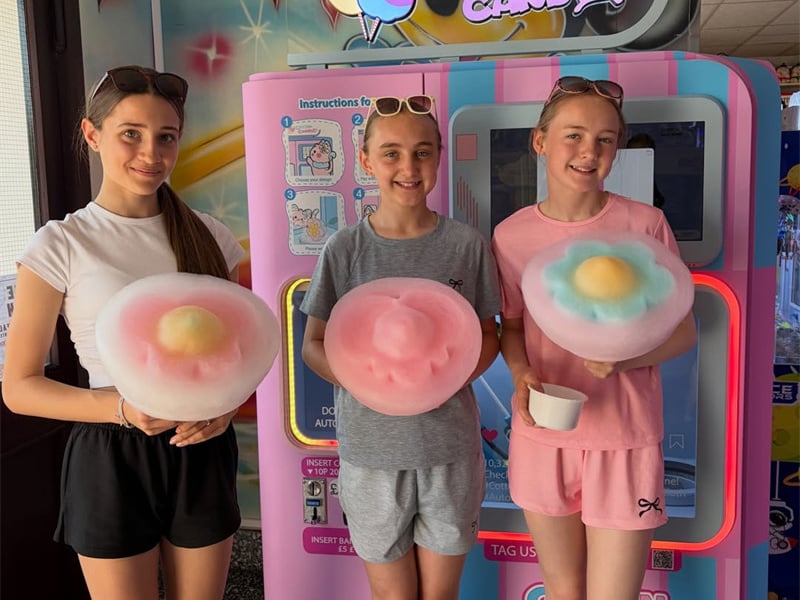
A busy shopping mall does not automatically mean a successful vending location.
SUNZEE operates its own automatic cotton candy vending machines in shopping malls, scenic areas, amusement parks, zoos and other commercial venues. Based on our operating experience, the exact placement inside a venue often matters more than the venue's total foot traffic.
A machine placed near a children's play area, where families stay for longer periods, can perform very differently from the same machine placed in a hidden corner or a corridor where visitors simply walk past.
For shopping mall operators and vending investors, there are three questions worth answering before installing a machine:
• Where should the machine be placed?
• What costs should be included when calculating returns?
• How should the location be operated and evaluated after launch?
This guide explains how SUNZEE approaches those questions based on our own mall operations.
Why Automatic Cotton Candy Vending Machines Work Well in Shopping Malls
Cotton candy is a highly visual product.
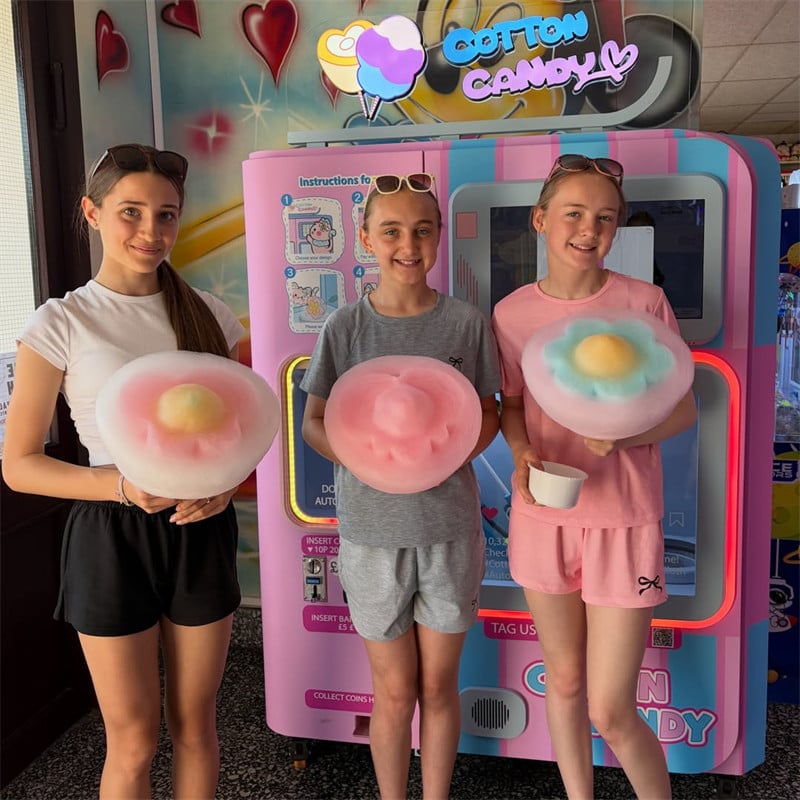
Unlike a packaged snack that customers simply take from a shelf, an automatic cotton candy vending machine allows customers to watch the product being made through the viewing window.
This makes the production process itself part of the experience.
The product also naturally appeals to families and children, two customer groups that are commonly found in shopping malls.
A fully automatic machine can complete ordering, payment and cotton candy production without requiring an employee to stand beside the machine throughout the day.
However, "unattended" does not mean "maintenance-free."
Operators still need to refill consumables, clean the machine, check its condition and respond when supplies are running low.
The advantage is that these tasks can be scheduled rather than requiring a dedicated employee to continuously serve customers.
Placement Matters More Than Total Mall Traffic
One of the most common mistakes in vending is evaluating only the total number of people entering a shopping mall.
High traffic is useful, but traffic alone does not create sales.
SUNZEE looks at several factors when evaluating a potential mall location:
1. Foot traffic
2. Dwell time
3. Percentage of families and children
4. Visibility
5. Rent
6. Network availability
7. Power supply
8. Whether there is enough space for customers to stop, watch and queue
The best location is usually one where several of these factors overlap.
1. Near Children's Play Areas
For cotton candy vending, this is one of the locations we pay the most attention to.
Children are the core audience for cotton candy, while parents usually have time to stop when their children are entering, leaving or taking a break from a play area.
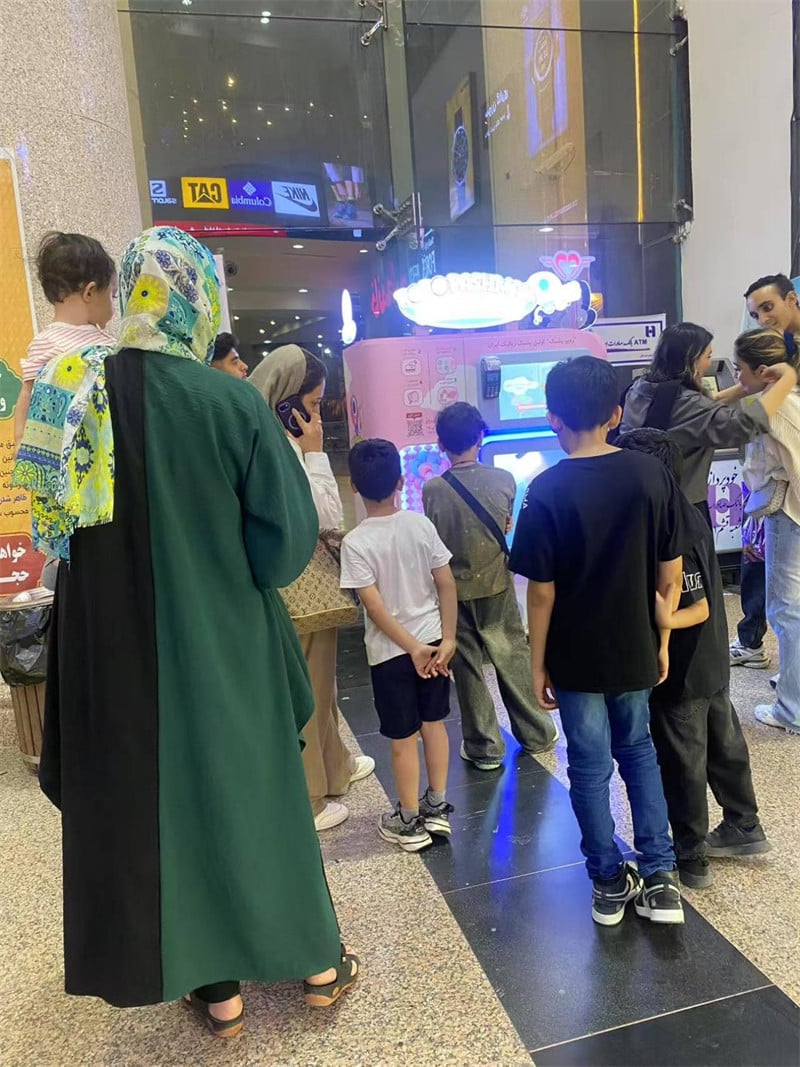
SUNZEE currently operates a cotton candy vending machine near a children's play area in a shopping mall that sells an average of approximately 160 cotton candies per day.
This is a real operating example from one of our own locations, not a guaranteed result for every mall.
Performance still depends on factors such as local traffic, selling price, rent, seasonality and exact placement.
2. Rest Areas
Rest areas are valuable because customers are already slowing down.
Parents may be sitting with children, shoppers may be taking a break, and visitors usually have more time to notice the machine and watch the cotton candy being made.
This creates a very different buying environment from a corridor where people are simply trying to reach another part of the mall.
3. Around Food and Dining Areas
The outer areas around food courts and restaurants can also be suitable.
The machine should not block restaurant traffic or normal circulation, but a visible position near a dining area can give customers an additional dessert or snack option after eating.
4. Main Corridors
A main corridor can work when it combines high traffic with sufficient stopping space.
The important part is not simply putting the machine where the highest number of people walk past.
If the passage is too narrow or customers are moving quickly, a large traffic number may produce relatively little engagement.
We prefer locations where people can see the machine in advance and have room to slow down.
5. Near Escalators
Escalators can create strong visibility because visitors naturally look around while entering or leaving each floor.
A location near an escalator can work particularly well when the machine is visible from several directions and there is enough space nearby for customers to stop without blocking circulation.
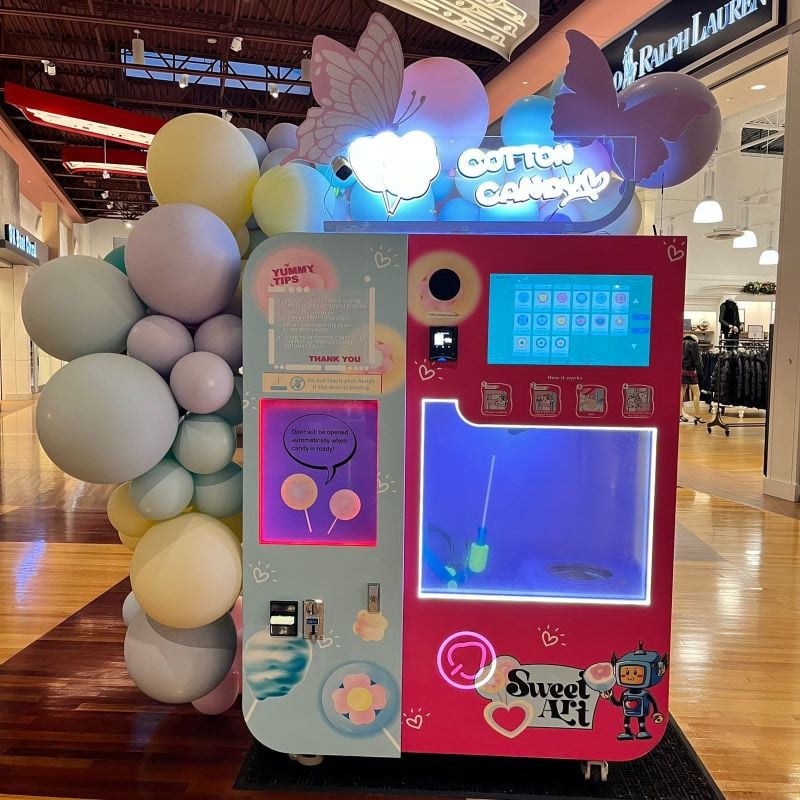
Locations We Usually Avoid
Not every high-traffic area is a good cotton candy vending location.
Based on our operating experience, we are cautious about:
• Hidden corners
• Areas with very few children or families
• Corridors where visitors move through quickly
• Locations where the machine cannot be seen until customers are already beside it
• Areas without enough room for people to stop
• Locations with unstable power or network connections
A simple question we often ask is:
"Will people have a reason and enough time to stop here?"
If the answer is no, high traffic alone may not be enough.
A Real SUNZEE Mall Operating Case
One of SUNZEE's self-operated shopping mall machines is placed near a children's play area.
The location currently averages approximately:
160 cotton candies per day.
Why does the location work?
It combines several factors:
• Continuous family traffic
• A high percentage of children
• Longer dwell time
• Strong machine visibility
• Enough space for customers to watch the production process
• A natural connection between entertainment and an impulse snack purchase
The important lesson is not that every children's play area will sell 160 servings per day.
The lesson is that customer type and dwell time can be just as important as raw foot traffic.
We recommend testing each location using its own sales data instead of applying the performance of one successful site to every mall.
Understanding the Operating Costs
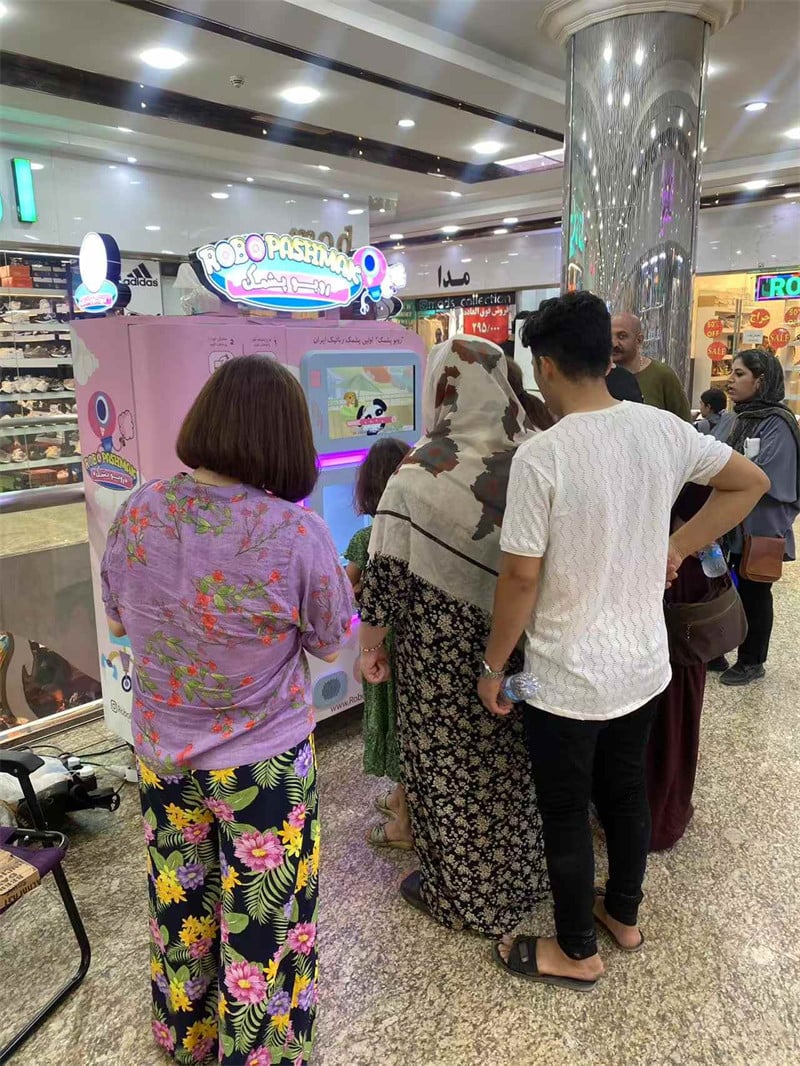
Revenue should never be evaluated using selling price alone.
Operators should consider consumables, rent, refilling, electricity, payment processing, maintenance and other local operating expenses.
Based on SUNZEE's own operations in China, the following figures can be used as a reference.
Consumable Cost
The basic consumable cost is approximately:
RMB 1 per cotton candy — about US$0.15.
Actual costs may vary depending on ingredient prices, cotton candy design and local sourcing.
Typical Selling Price in China
At our China operating locations, cotton candy is commonly sold for approximately:
RMB 15–30 per serving — roughly US$2.20–4.50.
International selling prices should be determined according to the local market rather than directly copying Chinese pricing.
Shopping Mall Rent
For some of the shopping mall locations we operate in China, monthly rent may be approximately:
RMB 1,000–2,000 per month — roughly US$150–300.
This is only a reference from our own operating environment.
Mall rental structures vary significantly by city, country, floor, location and commercial terms.
Restocking Labor
If an operator hires someone specifically to visit the location for restocking, our local reference cost can be approximately:
RMB 20–50 per visit — roughly US$3–7.50.
Operators managing multiple machines can often combine several locations into the same replenishment route.
USD equivalents above are approximate and exchange rates change over time.
How Much Can One Fully Stocked Machine Produce?
A fully stocked SUNZEE automatic cotton candy vending machine can produce approximately:
250 cotton candies before consumables need to be replenished.
Restocking frequency therefore depends directly on sales.
At many normal operating locations, replenishment may be required approximately once every three days.
A high-volume location will naturally require more frequent visits.
For example, a machine selling around 160 servings per day cannot rely on a three-day replenishment schedule.
This is why operators should not use the same service schedule for every machine.
Use Remote Monitoring Instead of Guessing When to Refill
SUNZEE machines support remote management, including consumable shortage alerts.
Instead of sending staff to every machine simply to check whether supplies are running low, operators can use the management system to monitor the machine remotely and arrange replenishment when necessary.
This becomes increasingly important as the number of machines grows.
For a single machine, an unnecessary visit may only waste a little time.
For an operator managing dozens of locations, route planning and remote inventory information can significantly affect operating efficiency.
How to Calculate a Mall Location
Rather than asking:
"How much money can one cotton candy vending machine make?"
we recommend calculating each proposed location individually.
A simplified model is:
Monthly Sales Revenue = Daily Orders × Selling Price × Operating Days
Then subtract:
• Consumable costs
• Mall rent or revenue share
• Refilling labor
• Electricity
• Third-party payment processing fees
• Maintenance
• Other local operating expenses
This gives a much more useful picture than looking only at the gross margin of sugar and other ingredients.
SUNZEE does not charge overseas customers an additional per-transaction platform fee for machine operation. However, fees charged by local banks, acquiring institutions or third-party payment providers may still apply, depending on the country and payment configuration.
What About Payback Period?
There is no single payback period that applies to every cotton candy vending machine.
Within our own operating experience, we have seen projects recover their initial equipment investment in as little as approximately one month, while other locations have taken around six months.
The main reasons for this difference are:
• Daily sales volume
• Selling price
• Venue rent
• Location quality
• Operating costs
• Seasonality
These figures are historical operating examples, not a guarantee or projected return for a new location.
A new operator should calculate expected returns using the actual rent, pricing and traffic conditions of the proposed venue.
For New Locations, Consider Revenue Share Before Fixed Rent
Another lesson from SUNZEE's own location operations is that operators do not always need to begin with fixed rent.
When we are evaluating a new location, we often prefer to discuss a revenue-sharing arrangement with the venue first.
This has an important advantage:
The location can generate real operating data before the operator takes on a fixed monthly rental commitment.
Once sales performance becomes clearer, the operator and venue can decide whether a fixed-rent arrangement makes more sense.
For customers purchasing SUNZEE machines, venue negotiations are normally handled directly between the operator and the mall.
Our recommendation is simply:
For an untested location, use real sales data before committing to a high fixed rental cost whenever the venue allows it.
Which SUNZEE Cotton Candy Machine Is Suitable for a Shopping Mall?
SUNZEE offers several fully automatic models suitable for commercial locations, including:
• Cotton candy vending machine MG330Pro
• Cotton candy vending machine MG330A
• Cotton candy vending machine MG320Pro
All three models can complete the main vending process automatically.
The best model does not depend only on whether the machine will be placed in a shopping mall.
Operators should also consider:
• Machine appearance
• Required functions
• Available placement space
• Venue style
• Customization requirements
• Budget
For example, a children's entertainment area may prefer a different exterior style from a premium shopping mall or commercial complex.
The correct approach is therefore to select the machine according to both the operating requirements and the visual environment of the location.
Daily Operation: What Does the Operator Actually Need to Do?
An automatic machine reduces the need for continuous staffing, but it still requires routine management.
Restocking
Monitor remaining consumables and replenish sugar and other required materials according to actual sales.
A normal location may only require replenishment every few days, while a high-performing location needs more frequent service.
Cleaning
Routine cleaning should be carried out according to the machine's operating and maintenance instructions.
Cleaning frequency should also increase when production volume is high.
Remote Monitoring
Use the remote management system to check machine status and consumable alerts instead of relying only on physical inspections.
Payment Management
For machines equipped with cash or coin payment systems, operators still need to arrange cash collection.
For cashless payments, settlement and payment-provider fees depend on the locally selected payment solution.
Location Review
Do not install the machine and then leave the location unchanged indefinitely.
Operators should continue reviewing:
• Daily sales
• Peak periods
• Customer behavior
• Visibility
• Queue conditions
• Rent versus sales performance
If a location underperforms, sometimes moving the same machine to a better position within the same mall is more effective than immediately replacing the equipment.
Shopping Mall Placement Checklist
Before confirming a location, we recommend checking the following:
Customer
• Is there enough family traffic?
• Do children frequently pass this area?
• Do visitors stay nearby?
Visibility
• Can customers see the machine before walking past it?
• Is it visible from more than one direction?
• Is it hidden behind kiosks, pillars or other equipment?
Space
• Can customers stop without blocking the main passage?
• Is there enough room for a small queue?
• Can staff access the machine for cleaning and refilling?
Infrastructure
• Is stable power available?
• Is the network connection reliable?
Commercial Terms
• What is the monthly rent?
• Is revenue sharing available?
• Are there additional mall management fees?
Operation
• How far is the location from the restocking route?
• How frequently will consumables need to be replenished?
• Can machine status be monitored remotely?
A strong location should make sense across all of these factors, not only foot traffic.
Frequently Asked Questions
Do I need a full-time employee beside the machine?
No dedicated serving employee is required during normal vending operation. The machine automatically handles ordering, payment and production.
However, operators still need to arrange restocking, cleaning, cash collection where applicable and routine maintenance.
How many cotton candies can one fully stocked machine make?
A fully stocked machine can produce approximately 250 servings, depending on the operating configuration and product selection.
How often does the machine need to be restocked?
It depends on sales.
A normal location may require replenishment approximately once every three days, while a high-volume mall location may need more frequent service.
Remote consumable alerts help operators plan replenishment according to actual inventory levels.
Where is the best place to put a cotton candy vending machine in a mall?
Based on SUNZEE's operating experience, locations worth evaluating include children's play areas, rest areas, food court peripheries, main corridors and areas near escalators.
The final decision should consider foot traffic, dwell time, family traffic, visibility, rent, power, network access and stopping space together.
Can SUNZEE guarantee how quickly the machine will pay back?
No.
Actual payback depends on selling price, sales volume, rent and other operating costs.
SUNZEE has seen different results across its own locations, which is why we recommend evaluating each new site using actual operating data rather than relying on a standard ROI promise.
The Machine Matters, but the Location Comes First
A fully automatic cotton candy vending machine can reduce the amount of on-site labor required and make it easier to operate a small-footprint retail point inside a shopping mall.
But the machine alone does not determine the result.
Based on SUNZEE's own operating experience, the most important questions are still:
Who passes the location?
Will they stop?
Can they see the machine?
Are there enough families and children?
Does the rent make sense for the sales volume?
That is why we recommend evaluating the location before focusing only on the machine.
If you are planning to operate a cotton candy vending machine in a shopping mall, send SUNZEE your country, venue type, proposed placement area and estimated foot traffic.
We can help you compare suitable fully automatic models and identify the operating factors worth checking before installation.
Table of Contents
- Why Automatic Cotton Candy Vending Machines Work Well in Shopping Malls
- Placement Matters More Than Total Mall Traffic
- Locations We Usually Avoid
- A Real SUNZEE Mall Operating Case
- Understanding the Operating Costs
- How Much Can One Fully Stocked Machine Produce?
- Use Remote Monitoring Instead of Guessing When to Refill
- How to Calculate a Mall Location
- What About Payback Period?
- For New Locations, Consider Revenue Share Before Fixed Rent
- Which SUNZEE Cotton Candy Machine Is Suitable for a Shopping Mall?
- Daily Operation: What Does the Operator Actually Need to Do?
- Shopping Mall Placement Checklist
- Frequently Asked Questions
- The Machine Matters, but the Location Comes First